

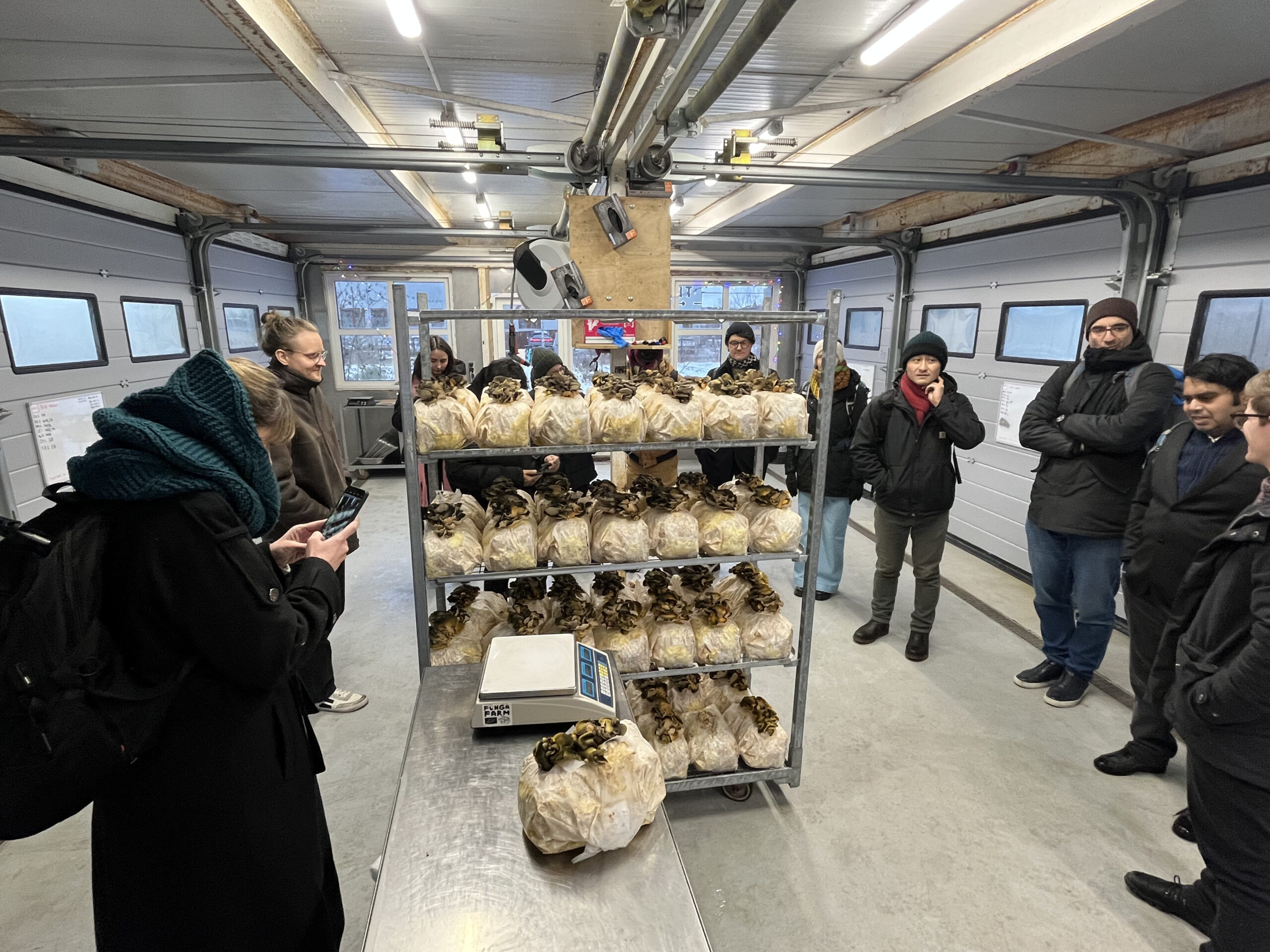
Mycelium is attracting growing interest as a source of sustainable protein, with innovators exploring its potential across a wide range of food applications.
For companies developing mycelium-based products, however, bringing these innovations to the European market can be a long and evolving process. Recent developments involving two fungal biomass products offer an interesting snapshot of how the EU regulatory landscape is evolving.
EU authorisation for Rhizomucor pusillus mycelium
In July 2026, Commission Implementing Regulation (EU) 2026/1507 authorised the placing on the EU market of Rhizomucor pusillus mycelium as a novel food, following a positive safety assessment from the European Food Safety Authority (EFSA). The filamentous fungal biomass powder, developed by The Protein Brewery, is authorised for use in several food categories (e.g. cereal bars and dairy analogues), as well as in food supplements and meal replacements for weight control, subject to the specified conditions of use.
The authorisation follows the EFSA risk assessment adopted in September 2025 and published in December 2025. EFSA concluded that the information provided on the production process, composition, stability and specifications was sufficient and did not raise safety concerns. EFSA also identified no concerns regarding genotoxicity and, taking into account the toxicological data, including a 90-day oral toxicity study, concluded that the novel food was safe under the proposed conditions of use.
The timeline behind the authorisation is also significant. The application was submitted in 2020, with the European Commission requesting EFSA’s scientific opinion in January 2021. More than six years later, the product has reached approval for the EU market. This highlights both the opportunity and the challenge for novel food developers, being that market authorisation is achievable, but can take significant time, investment and regulatory planning, especially for pioneer applications.
This product also provides an interesting international perspective. Before its EU authorisation, The Protein Brewery self-affirmed that their ingredient is generally recognized as safe (GRAS) under the proposed conditions of use in the US in 2021 and received regulatory approval from the Singapore Food Agency in March 2024, illustrating how regulatory pathways can develop at different speeds across markets.
When Regulatory Strategy Evolves
Another recent EFSA assessment demonstrates a different, but equally valuable, aspect of the EU novel food regulatory journey.
In 2025, EFSA assessed Fusarium sp. strain flavolapis biomass as a novel food, developed by Nature’s Fynd. EFSA concluded that the safety could not be established under the proposed conditions of use because the estimated intakes resulted in insufficient margins of exposure relative to the no-observed adverse effect level (NOAEL) identified from the 90-day subchronic toxicity study.
But this was not the end of their regulatory journey.
Nature’s Fynd subsequently revised its proposed food uses and reduced the proposed use levels. Following a request from the company, the European Commission then asked EFSA to provide technical assistance on the revised exposure estimates submitted in support of the application. EFSA assessed the revised food categories, lower use levels and updated intake estimates and, in its report published in July 2026, concluded that the novel food was safe under the revised proposed conditions of use.
This case highlights how the proposed use of a novel food, including the food categories and use levels, can play a critical role in the safety assessment. It also demonstrates that an initial assessment does not necessarily represent the end of the regulatory journey.
What does this mean for mycelium in Europe?
Taken together, these developments provide useful regulatory precedents for the European mycelium landscape.
The Rhizomucor pusillus authorisation demonstrates that fungal biomass produced through fermentation can successfully navigate the EU novel food regulation. The Nature’s Fynd assessment, meanwhile, illustrates how proposed uses and exposure can be crucial in influencing the outcome, and how regulatory strategies may evolve as new information becomes available.
However, neither case means that the EU pathway has suddenly become straightforward. But each assessment adds to an increasingly valuable body of regulatory experience.
For emerging technologies, regulatory precedents such as these are particularly valuable. As more innovative products are assessed, developers gain greater insight into the questions that need to be addressed, the importance of exposure and proposed uses, and the information needed to support a successful application. This growing experience is particularly relevant as research and innovation in mycelium-based foods continues to accelerate.
Connecting regulation with innovation
One project contributing to this broader development is PLANTOMYC, a Horizon Europe project running from 2025 to 2028.
The project is exploring the combination of plant proteins with mycelial protein biomass to develop minimally processed hybrid meat alternatives. It is also investigating fermentation and the potential use of circular substrates, with the wider aim of supporting more sustainable approaches to alternative protein production.
As innovation moves forward, understanding the regulatory landscape alongside the science will be increasingly important. Atova is proud to contribute regulatory expertise to PLANTOMYC, supporting the project in navigating the regulatory considerations associated with mycelium-based innovation and exploring potential pathways towards future applications.
The EU novel food landscape may be progressing gradually, but developments such as these show that the regulatory picture is becoming clearer: one assessment, one authorisation and one precedent at a time.