

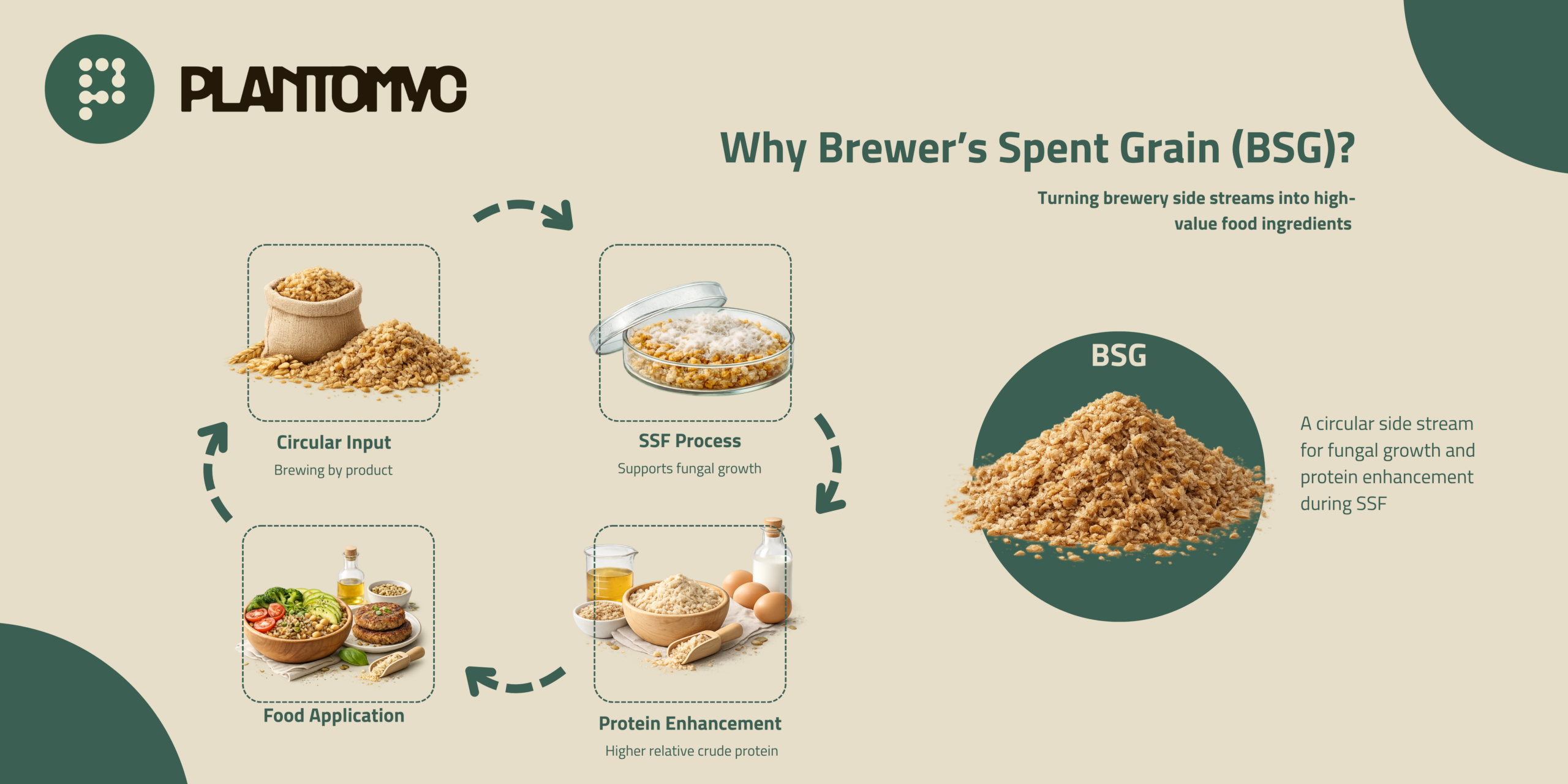
Brewer’s spent grain (BSG) is one of the largest and most underused side streams in the food system. Globally, beer production generates an estimated ~39–40 million tonnes of BSG each year, representing around 85% of all brewing by-products. In Europe alone, several million tonnes are produced annually, most of which is still directed to low‑value uses such as animal feed or anaerobically digested for biogas production.
Yet nutritionally, BSG is far from waste. It is naturally rich in dietary fibre (up to ~70% dry matter), contains 15–25% protein, and includes valuable micronutrients and bioactive compounds such as phenolics and dietary fibers like β‑glucans. This composition makes BSG an excellent candidate for biotechnological upgrading rather than disposal.
One of the most promising routes for this upcycling is solid‑state fermentation (SSF). SSF mimics the natural growth environment of filamentous fungi and allows mycelium to grow directly on moist solid substrates like BSG, without the need for large volumes of water or intensive processing. Scientific literature consistently shows that SSF can improve protein availability, increase relative crude protein content, enhance digestibility and reduce anti‑nutritional factors in BSG.
Within PLANTOMYC, BSG plays a central role as a circular fermentation substrate, enabled through close collaboration with BRØL brewery, which supplies fresh brewer’s spent grain from its production process. This partnership allows the project to work with real, industrial side streams, anchoring research and innovation in practical brewing conditions. BSG is not treated as a waste stream to be “managed”, but as a functional raw material for next‑generation foods. Within PLANTOMYC, BSG plays a central role as a circular fermentation substrate.
Subsequently, Millow, a pioneer in solid-state fermentation, strategically tailors this substrate by blending BSG with stale bread and pea starch in optimized ratios, boosting mycelial growth and unlocking the creation of a unique, minimally processed whole-cut meat analogue that excel in texture, mouthfeel and flavour performance.
This approach reflects a broader shift in food systems innovation: from linear by-products to circular resources. Upcycling BSG through fermentation reduces waste, lowers reliance on virgin agricultural inputs, and contributes to protein diversification and resource efficiency, two pillars repeatedly identified as critical for food system resilience.
By turning brewery side streams into high‑value food ingredients, PLANTOMYC shows how fermentation can bridge sustainability and sensory quality, demonstrating that circularity is not a constraint, but a driver of innovation in the future of protein.